
DISPEST_2 Training Course in Stellenbosch, South Africa (3–14 November)

From 3 to 14 November, partners of the DISPEST2 project gathered in Stellenbosch, South Africa, for an intensive two-week mission focused on capacity building, advanced training, and project coordination in the field of fruit fly (Tephritidae) research.
Advanced Course on Tephritidae Taxonomy
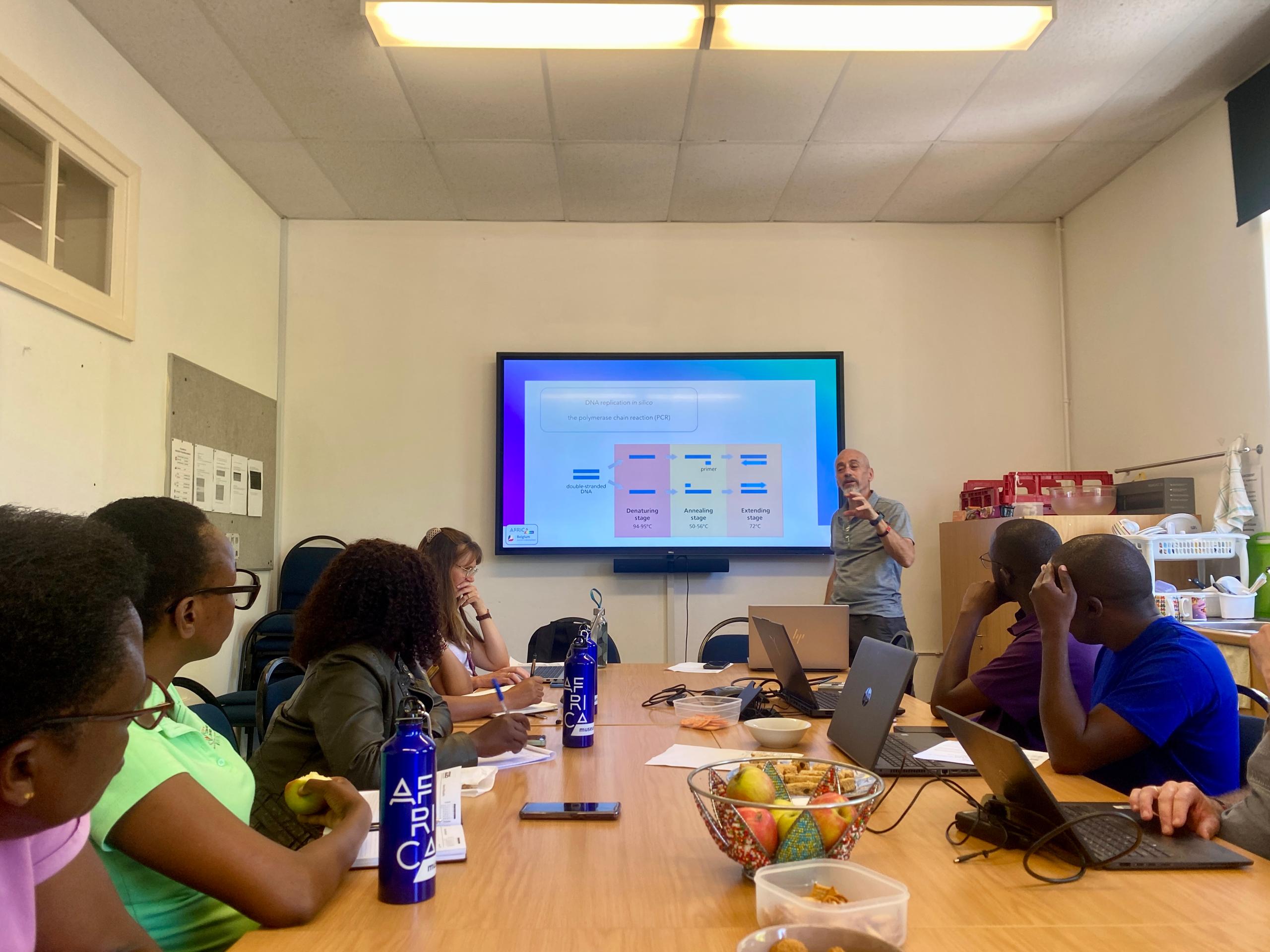
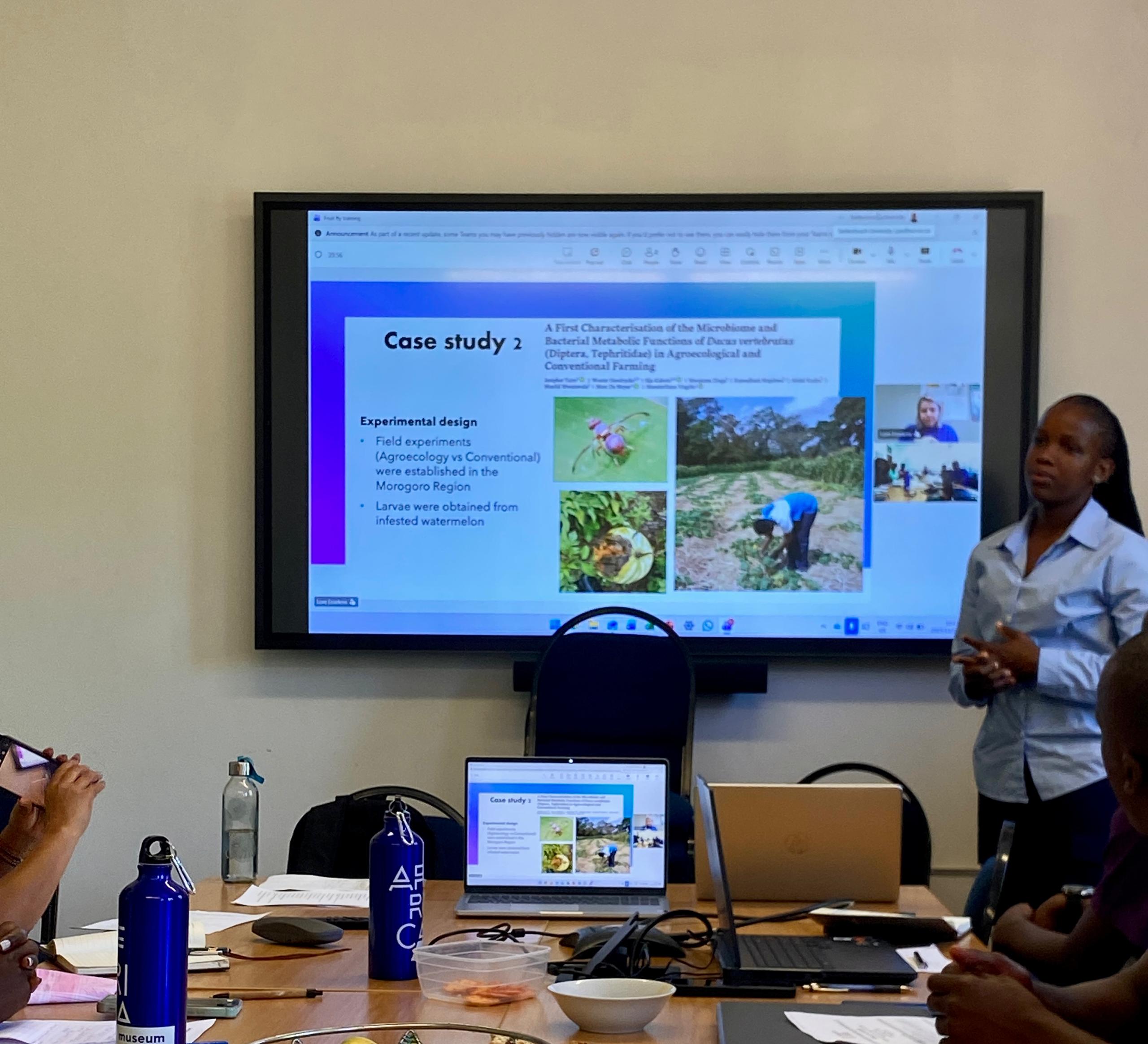
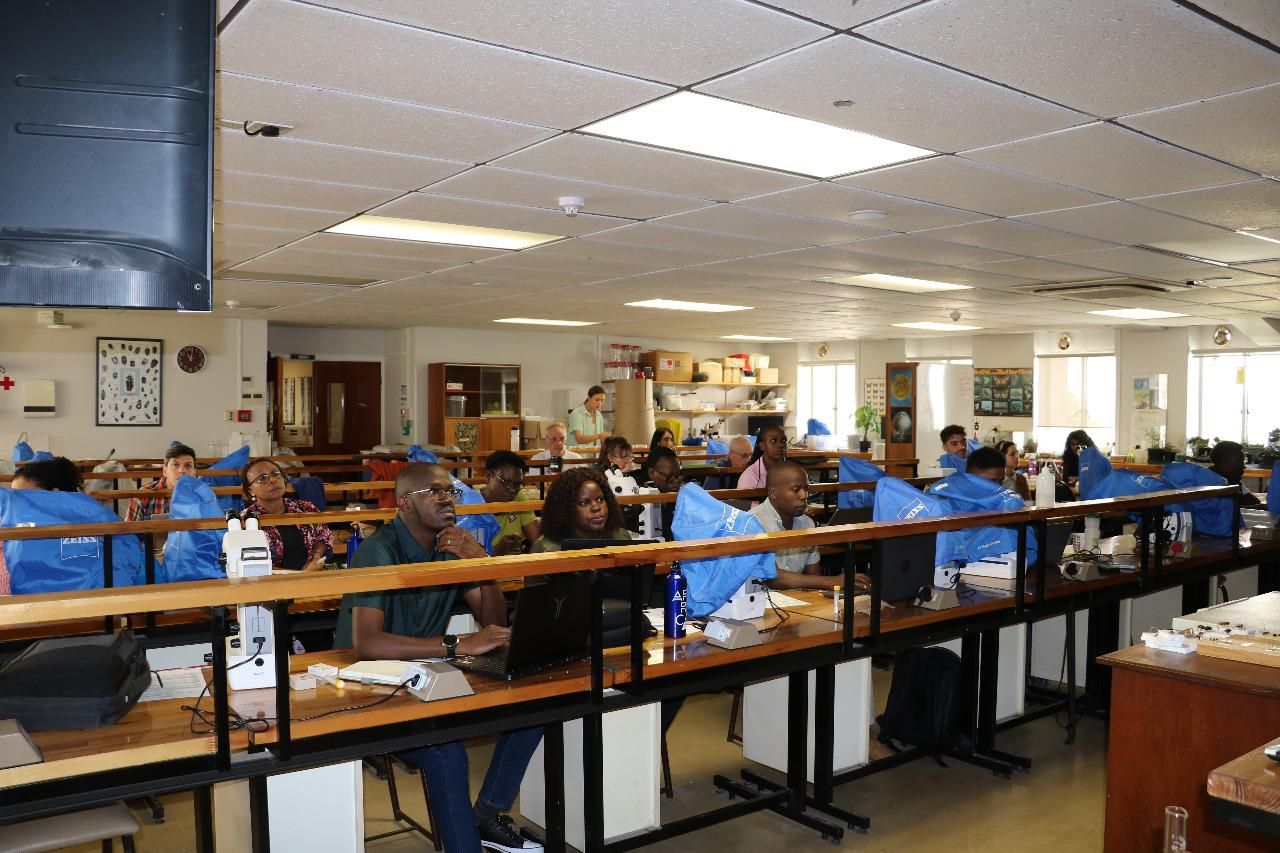
The first week (3–7 November) was dedicated to an advanced training course on Tephritidae taxonomy, building on a programme initiated in 2022. The course targeted African professionals already involved in fruit fly identification and training, who had previously completed basic-level courses.
Eight trainees from Botswana, Kenya, Mozambique, South Africa, and Uganda participated, alongside DISPEST2-linked PhD students from Tanzania, Mozambique, and South Africa. The programme combined theory and practice, covering:
- Morphological and molecular identification of Tephritidae
- Host plant status
- Control and monitoring strategies
The course was delivered by a multidisciplinary team of experts from Stellenbosch University (P. Addison), University of Pretoria, RMCA (M. De Meyer, M. Virgilio, L. Esselens), EMU (L. Bota), and CRI (A. Manrakhan), fostering rich exchanges between institutions and regions.
Introduction to Geographic Information Systems (GIS)
During the second week (10–14 November), selected project PhD and MSc students took part in an Introduction to Geographic Information Systems (GIS) course organised by Stellenbosch University. This training aimed to provide participants with essential GIS skills relevant to pest monitoring, spatial analysis, and applied research.
Key topics included:
- Fundamentals of GIS and spatial data
- Coordinate systems and map projections
- Data acquisition and management
- Basic spatial analysis
- Introduction to GIS software tools
Coordination and Future Planning
Beyond training activities, the mission also included a general coordination meeting with project students and supervisors to review MSc and PhD programmes, strengthen inter-institutional collaboration, and promote South–South knowledge exchange.
Additional activities included:
- Drafting policy briefs for South Africa, Tanzania, and Mozambique
- Planning upcoming surveys and field experiments in Mozambique and Tanzania
- Discussing recruitment and action plans for new PhD students
Overall, the mission reinforced DISPEST2’s commitment to sustainable capacity building, regional collaboration, and the integration of advanced scientific tools to support pest management and agricultural resilience across Africa.